Welcome back to another rip-roarin’ review at B-Movie Enema!
For pretty much all my life, dinosaurs were immensely popular. Moreover, they ignited a lot of children’s imaginations. In the 80s, not only were there movies like Baby: Secret of the Legend which came out at the exact age for me to not only want to see it but to also convince my mother to take me to a theater to see it. The same year, 1985, the Dinobots made their bow in The Transformers. Dinosaurs couldn’t have been more popular than that period of time. Later, a new generation would get the start of a looooong series of animated features with The Land Before Time. Even before that, for decades, dinosaurs were used in all sorts of sci-fi movies, especially the lower-budget ones.
But then came 1993.
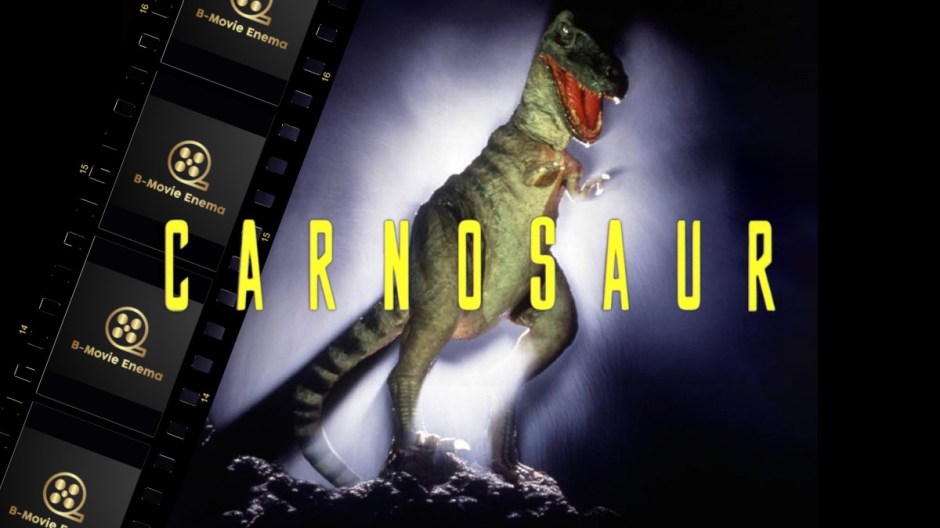
I would argue 1993 was the pinnacle of dino-mania. You like that? Dino mania? I am 100% sure no one else has ever said that term before, and they definitely didn’t say it 32 years ago in 1993. Anyway, that’s when Steven Spielberg would have one of his very biggest years ever… maybe for any director in Hollywood history. He’d make two films that year. One, Schindler’s List, would win him the Oscars for Best Director and Best Picture. That was AFTER he released the year’s top-grossing film, and one of the biggest box office champs in the history of movies, Jurassic Park. But we’re going to look at the movie that made 1993 truly the greatest year at the box office for dinosaur movies – Carnosaur.
Continue reading “Carnosaur (1993)”