
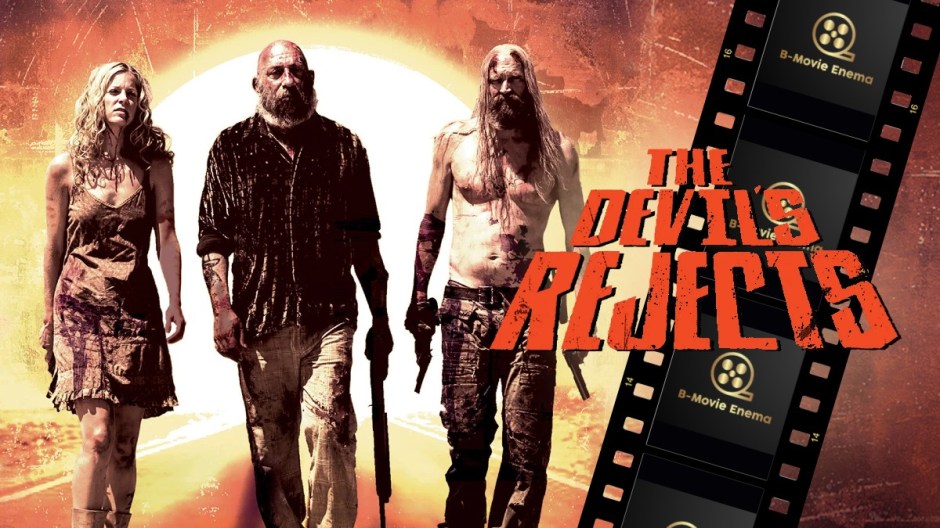
Welcome to the very exact midpoint of this year’s Rob Zombie Spookshow here at B-Movie Enema.
In 2003, after a couple of years of trying to find a distributor or studio willing to take a chance on his grindhouse throwback, Rob Zombie introduced a terrifyingly raw and visceral form of horror that, maybe ahead of its time, really put audiences through more of a horrifying experience than a form of entertainment. This was his debut movie, House of 1000 Corpses. It really played like the nightmarish and realistic grit that was seen in movies like The Texas Chainsaw Massacre. At times, it felt like you were watching something you weren’t supposed to see. It was equal parts a movie narrative and a window inside a scattered and deranged mind.
What made the movie terrifying were the members of the Firefly family. Specifically, Otis, played by Bill Moseley, himself a veteran of the TCM franchise, Baby, played by Sheri Moon Zombie, and friend and accomplice to the family, Captain Spaulding, a deranged clown played by Sid Haig. They were violent. They were antisocial. In the case of Captain Spaulding, he was charismatic. In the case of Baby, she was sexy – a honeypot waiting to reveal a psychotic who liked to play with her prey.
While working on House of 1000 Corpses, Zombie would have what he called a “vague” idea for a story that featured the brother of a sheriff the Fireflies killed coming back for revenge on the family. This revenge plot leads him on a manhunt for the three most interesting characters to complete his revenge. Thus was born what is undoubtedly Zombie’s masterpiece, The Devil’s Rejects.
Continue reading “The Devil’s Rejects (2005)”
