
Happy Halloween, my dear, ghoulish Enemaniacs! We’ve made it… Rob Zombie’s Spookshow at B-Movie Enema went overtime, but also will conclude today, on the greatest and spookiest of all days, and as they all say, “Everyone deserves one good generational family trauma.”
Yesterday, I looked at the oft-reviled 2007 version of Halloween. The opportunity for him to do that remake came at the pinnacle of Rob Zombie’s popularity as a horror filmmaker. He was basically able to write the check himself for whatever he wanted to do after The Devil’s Rejects scored big with horror fans and even some critics. However, I’m not entirely sure what horror fans expected from Zombie. Did they think Zombie was going to make a slick thriller like Carpenter would? Did they expect Zombie to basically make a shot-for-shot, scene-by-scene remake like Gus Van Sant did with Psycho in 1998? Why did they think it wasn’t going to be more in alignment with House of 1000 Corpses and the aforementioned The Devil’s Rejects?
I don’t know what people expected because we got a Rob Zombie movie. A Rob Zombie movie, I might add, I like more today than I ever did at any point in the past. But this kind of derailed him as a potentially viable horror auteur going forward. He had a ton of goodwill built up, and it all got spent and flushed down the toilet by the Halloween fans simply railing against it for days, weeks, months, years, and now decades. But that movie did make enough money out of the gate for producer Malek Akkad to say he wanted a sequel.
And boy, what a sequel 2009’s Halloween II is.
Initially, French filmmakers Julien Maury and Alexandre Bustillo were approached to make Halloween II. However, Zombie, despite being exhausted after making the first one, and the beating he had to have been feeling from people he thought were his fanbase, ultimately returned as writer, director, and producer. Here’s where things really seem to start by not even being connected to the rails for the movie to fly off of. Zombie was interested in returning for one key reason – he could technically do whatever the fuck he wanted.
After remaking Halloween, a sequel, he felt no longer needed to be tied to anything even remotely related to John Carpenter. So he could make his own movie. Akkad originally thought that if Zombie wouldn’t return, the sequel would be more of a typical sequel, but after he ultimately felt Maury and Bustillo weren’t exactly understanding what he wanted, Akkad was happy to hear that Zombie was able to refresh himself after taking a year off, following the pressures of the first film.
This film would have several returning actors from the first and would ultimately be carrying on from what happened during the third act of the first. Of course, Scout Taylor-Compton was back as Laurie, dealing with the trauma Michael brought upon her, killing her parents, attacking her and her friends, etc. Naturally, Malcolm McDowell returned as Dr. Loomis, surviving what was initially thought to be a deadly case of getting his eyes gauged out. Tyler Mane would be back as Michael Myers. But people you wouldn’t expect to return got to with what Zombie was going for. Sheri Moon Zombie comes back as an angelic version of Deborah Myers, who helps lead Michael on a more spiritual journey. Danielle Harris returns as Annie Brackett, a character who did not survive Carpenter’s original. Of course, that also means Brad Dourif is back as Annie’s father, Sheriff Brackett.
Ultimately, bringing all these characters back allowed Zombie to explore more of the psychological effects of what happened on the night Michael Myers came home. Every single returning character is different in some way. Even down to Michael and Deborah Myers being changed. I… I mean, Deborah Myers is dead, so how she’s changed is how Michael perceives the visions of his mother. Oh… Did I not explain well enough that Sheri Moon Zombie is a ghost that comes to Michael? Yeah, this shit gets trippy, Enemaniacs!
However, I don’t think it’s nearly as trippy as its reputation says it is.
Zombie is on the record saying that the only returning character to not have any emotional, mental, or character growth is Michael. He’s basically still that 10-year-old boy who killed everyone in his house on Halloween, 1990. The difference is how Michael is portrayed in the movie. It’s a physical change to how he looks by having Michael mostly wander the wilderness of Illinois as a scruffy, bearded, homeless-looking guy more interested in hiding and waiting than drawing attention to himself.
This movie is largely known for being pretty out there. It’s not entirely a different feel from what you’d expect from Zombie and his first film, but it’s a completely different animal from the remake this is sequelizing. If we thought the 2007 film was a different beast, this one definitely zags when audiences expected it to zig. And I suppose I should take that as the cue to get started with this review.
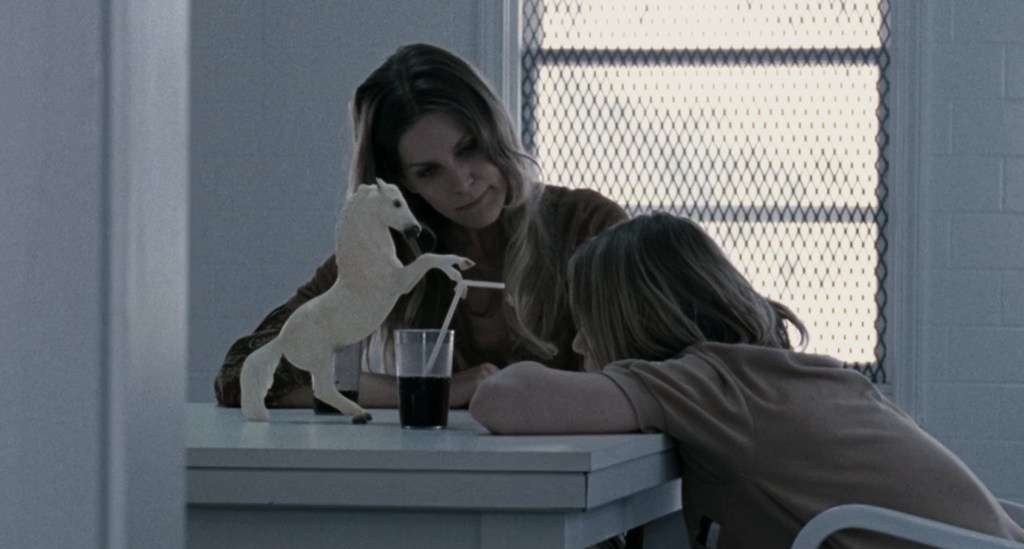
This sequel opens with a little bit of a retcon, because what’s a Halloween II without a retcon, am I right? The blurb before the movie starts is about the dream symbolism of white horses, which usually represent some sort of release of incredible emotional outbursts, like rage. Deborah visits Michael at Smith’s Grove to give him a white horse toy. Michael tells her that he had a dream of his mother dressed in all white, like a ghost with a big white horse. They walk down a white hallway to tell Michael she is taking him home with her.
We return to the present after Laurie has shot Michael in the face, believing she has killed him. Laurie wanders the streets of Haddonfield in a daze, still holding the gun. Sheriff Brackett finds her and disarms her. He comforts her when she thinks that she killed a man. He takes her to the hospital to be treated for her injuries and shock. Meanwhile, the police also retrieve a still living Dr. Loomis from the Myers house.
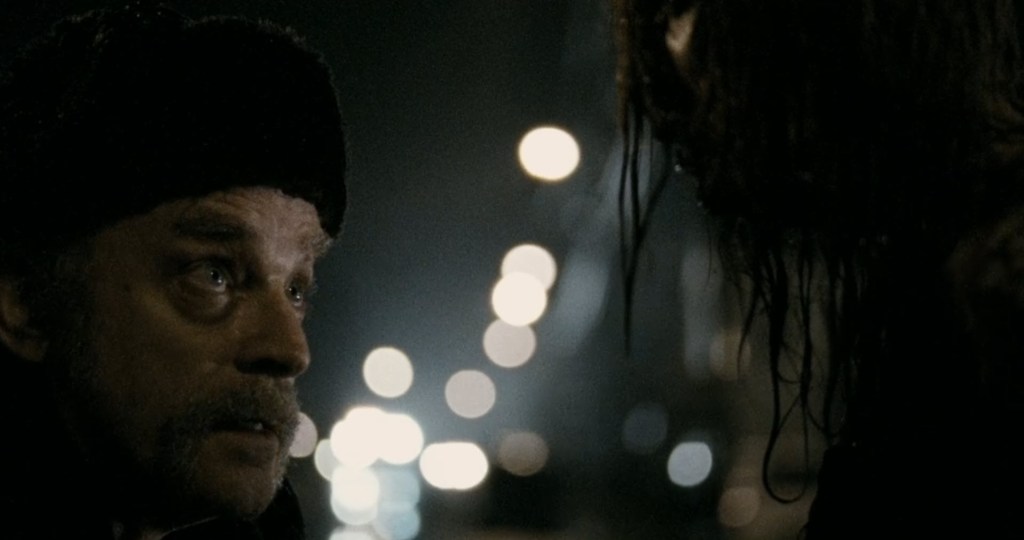
People from the coroner’s office collect Michael’s body to take him to the morgue. Brackett tells the coroners that he wants Michael locked up tight until he can arrive in the morning. One of the guys says he thinks the cause of death for Michael is fairly obvious, what with the gunshot to the face and what have you. Brackett says there is nothing obvious about what happened tonight.
The coroners are too busy crackin’ dirty jokes and speaking Rob Zombie lines to notice a cow in the middle of the road. They smash into the cow. It kills the driver, and Michael is suddenly revived in the back of the van, and he beheads the other guy, played by Richard Brake. This scene is often used as one of the most commonly criticized things about this movie. Richard Brake’s character both comments on the fuckability of the very dead body of Laurie’s friend Lynda, and says the word “fuck” maybe more than all the other words in his dialogue. It’s a lewd scene that is punctuated with the coroner driving telling the joke, “What’s the difference between jelly and jam? You can jelly your cock up a dead girl’s ass!”
Now, I didn’t see this movie in the theater. In fact, before right now, for this review, I’m not sure if I’ve seen this movie from start to finish in one setting. I’ve seen bits of it many times, as this is a staple of AMC Fear Fest each October. In fact, if you’re reading this on October 31st or maybe even November 1st, you may be able to turn over to that channel and see it right now. But I can imagine there are some folks in theaters when that scene happened who found that scene funny, but it really isn’t. Like I said, it’s lewd. It’s one thing for maybe Otis Driftwood to tell that joke to Captain Spaulding or vice versa, but it’s another thing to expect something like that in a movie that is otherwise a studio sequel that is meant to appeal to a wider audience. I’d be willing to bet that scene, the commentary on an underage girl’s naked body and how much one of the guys wants to fuck it, and that joke would all be things Zombie would think twice about putting in if he had another chance to do this movie. It’s just an unsavory thing that sets an even more unsavory tone for the audience than the early scenes of the first film with the Myers family’s dysfunction.
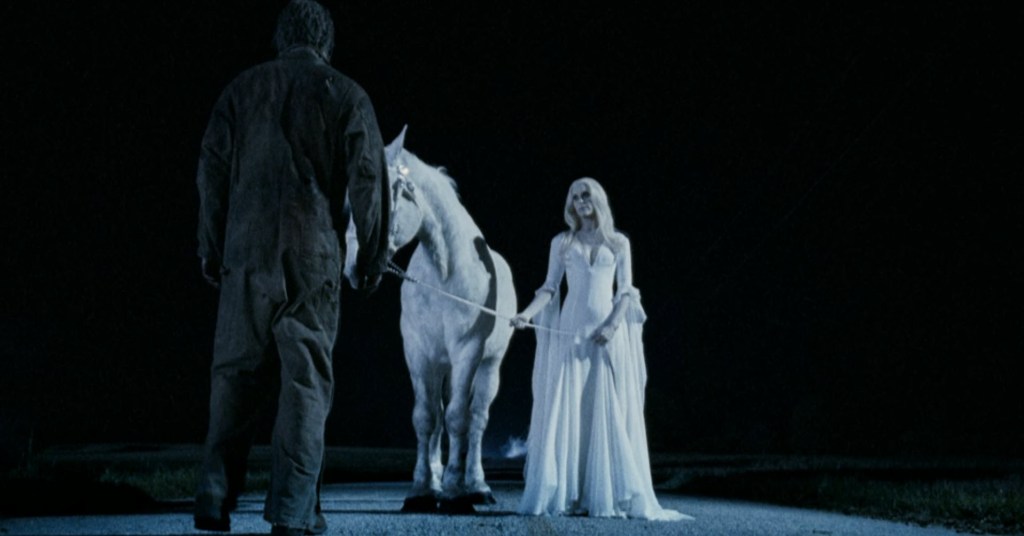
The scene ends with the first appearance of the ghostly Deborah Myers guiding Michael with her white horse and ghostly appearance. That transitions to the hospital, where “Nights in White Satin” plays while Laurie wakes up to visit Annie in her room. Meanwhile, Nurse Octavia Spencer and Dr. Caroline Williams (from The Texas Chainsaw Massacre Part 2) chat about Thanksgiving. Unfortunately for everyone working the late shift at the hospital, Michael is coming to look for Laurie.
His brutal slashing of Octavia Spencer, which ultimately becomes something like a dozen stabs, becomes the pose of Michael used on the poster. So… How’s that for some useless trivia?
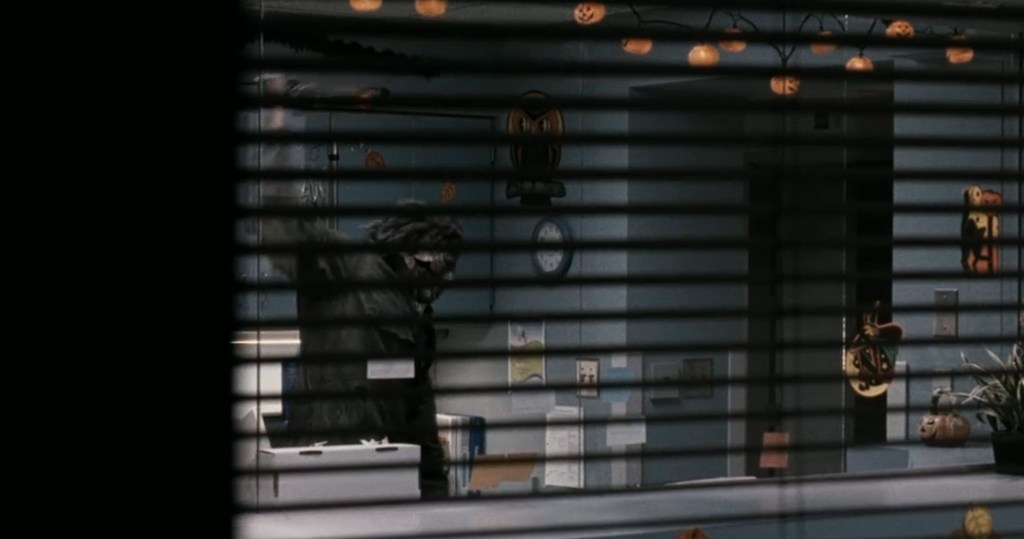
It is kind of funny that Rob Zombie decided to return for this movie because he could move away form all the John Carptenter-ness of the franchise and do his own thing. Yet, this portion of the movie relies heavily on the hospital setting of the Carpenter-penned and produced Halloween II from 1981. Sure, it isn’t the whole movie like that 1981 film was, but he could have largely avoided this whole part. He could have just had Michael and Laurie go their separate ways until they ultimately rush headlong into each other again a year or two later.
Anyway, a kindly night watchman, named Buddy, finds Laurie hiding in his security station. He says he’s going to help her, but it’s clear that Michael is gonna get him and get her. While she sits waiting for Buddy to come back, the television flips on again for the Moody Blues’ “Nights in White Satin” to play again, tipping us off to something important about this opening sequence. After Michael kills Buddy, he approaches Laurie to kill her, but Laurie wakes up from a dream.
Yup, it was all a nightmare. Now, I’m really curious why this scene wasn’t just skipped, which plays heavily with Carpenter’s ideas of Laurie being hunted by Michael at a hospital. I mean, I get it. It’s supposed to set up with the lasting trauma of that night that Michael attacked her, and how it’s almost impossible for that to go away for good, but anyway. I digress.
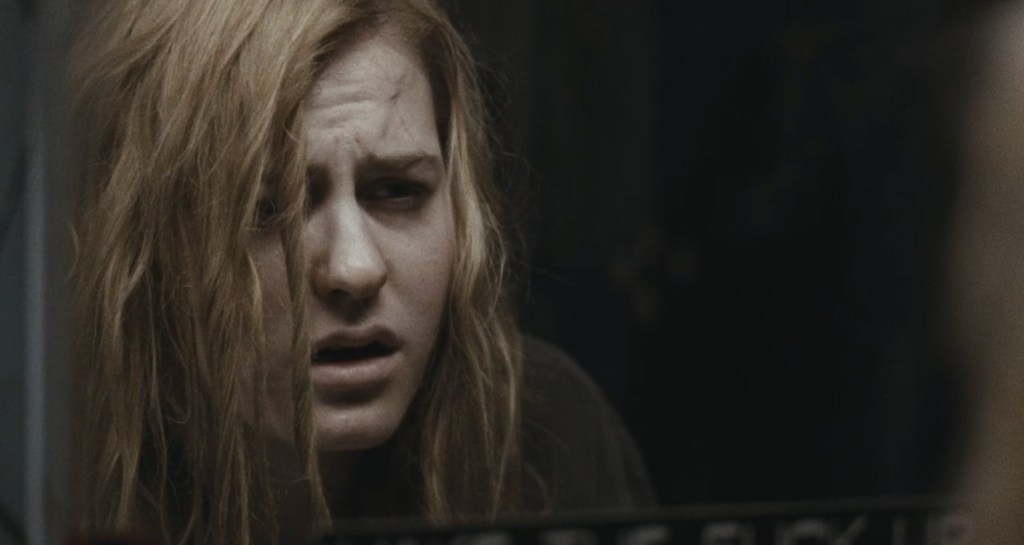
I mentioned earlier that Laurie is not in a good way. She’s dealing with some massive trauma over the events of the year before. She’s no longer the bright, happy-go-lucky girl she was in the first film. She is now living with Sheriff Brackett and Annie. Annie mentions how she hears Laurie screaming every night. Annie is a really strong character in Laurie’s life. She tries to help Laurie through everything and offers support. She’s especially a great friend because don’t forget… Annie herself was attacked within an inch of her life.
Laurie’s therapist is played by Margot Kidder, which is awesome. She’s a major part of my childhood from the Superman movies. She tries to explain to Laurie that it’s Halloween, and this has to be a trigger for her that is keeping her from being able to enter back into a more normal flow of life at the speed she wants. She still has a lot of healing to do, and right now, it’s not the time of year that’s going to help her with that. That’s not even mentioning the truth that Michael’s body was never found after she shot him, and he was taken away by the coroners.
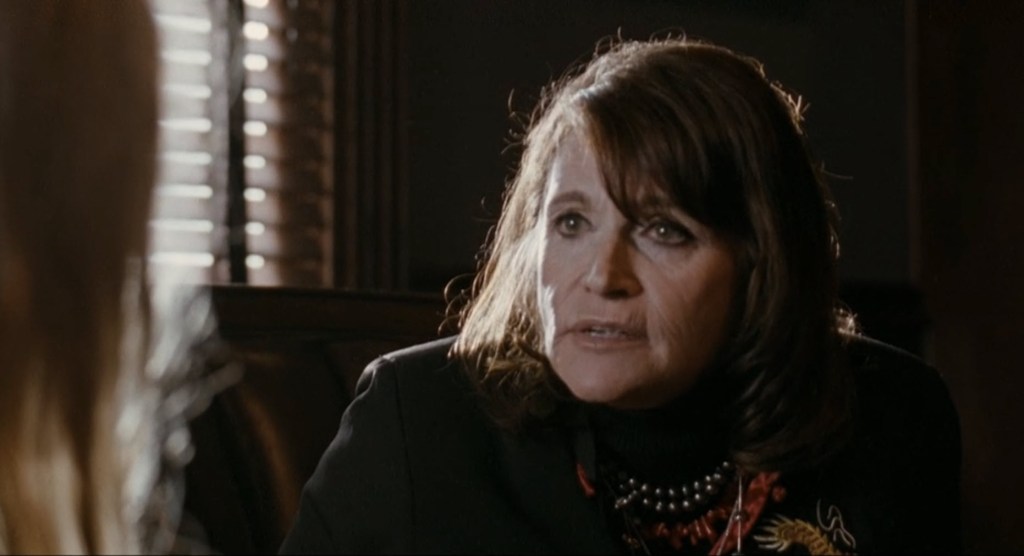
If the first 25 minutes or so of the movie carry on the path of the typical horror sequel, especially a typical Rob Zombie horror film, I like this portion of the movie quite a bit. It’s quieter. It wants to explore the natural aftermath of a traumatic event. Honestly, I don’t think there’s any Rob Zombie movie that wants to have these types of dialogue scenes. And nary a mention of the word “fuck.” So, there’s that.
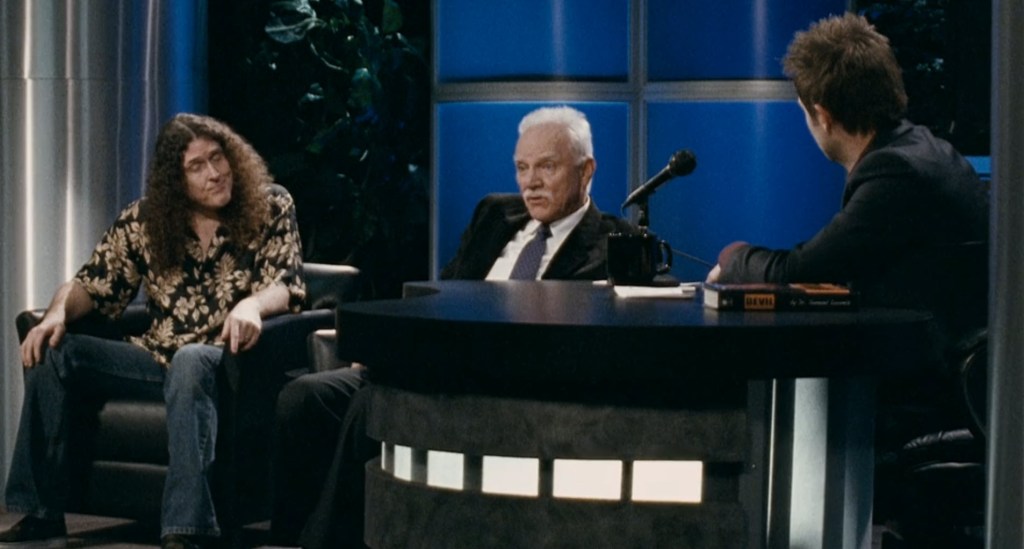
Laurie isn’t the only one irreversibly changed by the events from a year ago. Loomis is going through a change of his own. He’s leaned further into using his relationship with Michael for fame and fortune. He sells more books. He goes on tours. He shows up on TV interview shows hosted by a character played by Chris Hardwick and sits on a panel with Weird Al Yankovic (this movie’s Micky Dolenz). He’s deciding to cash in on his trauma in a more cravenly capitalistic way. It reveals that he has some deep-seated issues with his long relationship with Michael that probably should have also been examined by someone. But fuck it… Make that monies, Loomis, baby!
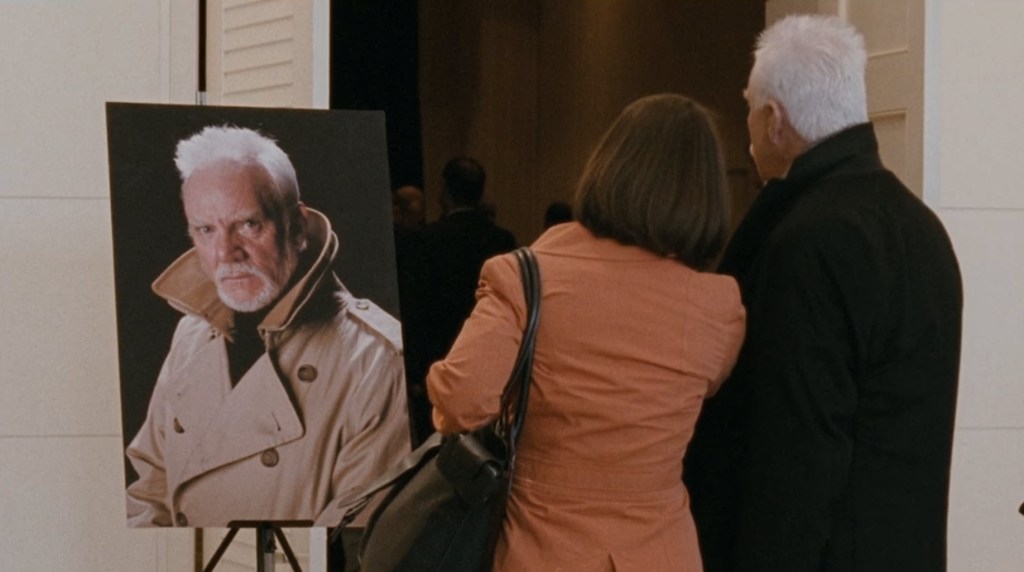
Laurie works at a coffee shop run by Howard Hesseman. She works with a couple of girls who want Laurie to go to a costume party with them, dressed in a Rocky Horror Picture Show theme – something Laurie is not so interested in that idea for the party. Meanwhile, Loomis is having a chat promoting his new book coming out in a couple of days. He constantly faces questions about his responsibility for the number of people who died last year and whether he believes Michael is truly dead or not.
This is a pretty fascinating concept that I appreciate Zombie exploring at least a little bit in both of these films. I agree with making Loomis a little more willing to cash in on his relationship with Michael. The Donald Pleasance version in the original is more of a typical doctor. He’s written to be the altruistic mentor character who knows better than anyone the evil that lives behind Michael’s soulless eyes. In this movie, he’s a typical doctor, but not a movie doctor with heroic tendencies, because that’s what the movie calls for. He’s a typical doctor who, yeah, knows how to talk to child patients who are dealing with normal 1990 issues. Some of them, I’m sure, he helps. Some of them, maybe not so much. Michael was a different animal. He’s psychotic. He’s dangerous. He kills. He’s not like the other kids Loomis treats. He saw a special opportunity with Michael and cashed in. I kind of think that’s a very realistic thing we’d expect people to do when faced with something this unique and special.
That said, this is the first time that Loomis was blamed for Michael’s rampages. However, exactly how much is he to blame? I’m not sure if the Pleasance version has any liability. I’m also not so sure the McDowell version should either, but I like that the focus seems to be on the blood money he’s made off the relationship with Michael. That does have some ethical and moral ramifications – especially when he wants to use the Myers house in interviews to sell the “sizzle” instead of the “steak” of his enterprising writing career.
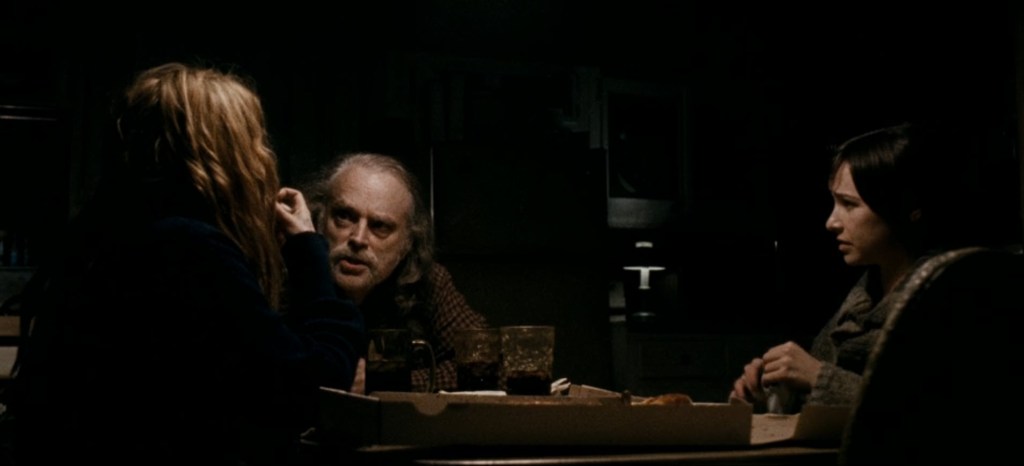
Something else I must say I appreciate in both of these Halloween movies is the performances from the more experienced actors. I know yesterday I commented positively about Malcolm McDowell’s Loomis, definitely the best thing this duology has going for it. However, Brad Dourif’s expanded role in this as Sheriff Brackett also shows his ability to play a character that is totally his. I’m not thinking of Charles Cyphers’s version. That’s hardly a character in the first two films. He’s largely someone that Donald Pleasance bounces ideas, actions, and exposition off of. Here, he’s actually a loving father figure. It’s a full character, especially in this movie. The scenes in which he’s sitting down for dinner with Annie and Laurie, in this very fucked up family that’s been created out of circumstance, feel genuine. It’s where reimaginings and remakes can actually do something better than originals.
Anyway… I digress. Halloween is approaching. Michael is having more and more visions of his mother urging him to be ready and to “bring them home.” There appears to be a psychological connection between Michael and Laurie as well. She starts having dreams with Deborah in them. She has a dream reenacting when Michael killed Ronnie, but she’s strapping down and slitting Annie’s throat. When Michael kills a dog to eat it, she gets sick and throws up.
All the while, Michael is walking toward Haddonfield. One of the stops he makes is at the Rabbit in Red showclub, where Deborah danced a couple of decades ago. They also exploit the fame that the Myers family brought to the area. They advertise themselves as the “Home of Deborah Myers.” The owner of the club, played by Daniel Roebuck, advertises for Halloween to cash in on Michael Myers’ rampage. Michael rectifies this by killing everyone in the club, including caving in the face of Jeff Daniel Phillips and slashing the shit out of Daniel Roebuck. Oh, and he definitely smashes the shit out of a poor stripper’s face and skull and brain against a mirror.
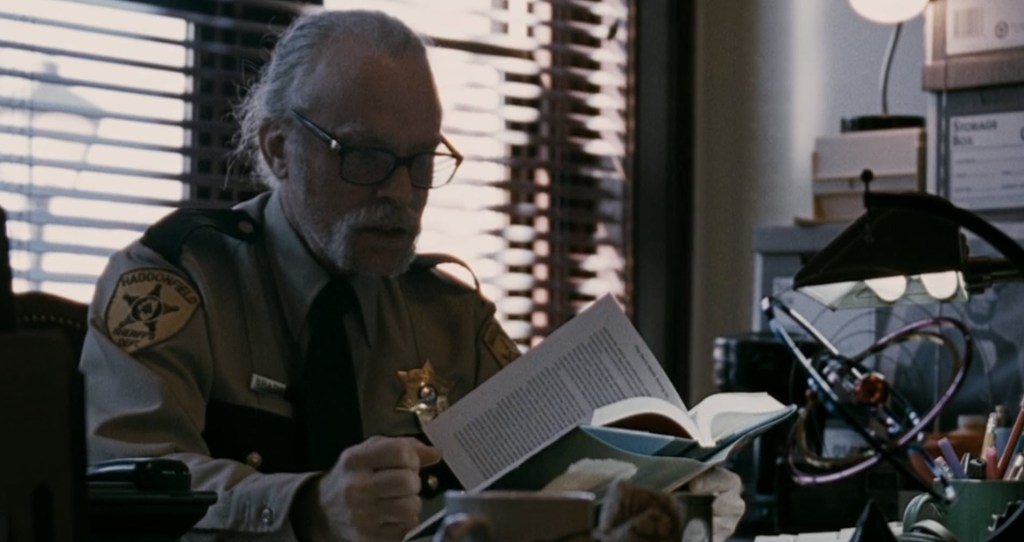
With the arrival of Halloween, the new book about Michael is released. Brackett gets a copy and reads it, becoming infuriated that the secret about Laurie’s true parentage is revealed. This was something that Brackett told Loomis in confidence to help find where Michael was going in the previous film. He’s concerned with what will happen when Laurie, who doesn’t know this, finds out the truth. This will also mean that it will bring even more attention to Laurie beyond being a survivor. Unfortunately, Laurie buys a copy of the book before Brackett and can break the news to her himself.
Speaking of attention, Loomis has a book signing. Because the public loves true crime and salacious stories, the signing is heavily attended. People want pictures with a smiling Loomis. A Michael Myers-obsessed guy tells him how much cooler Michael is than Dahmer or Bundy because of how savage he is. He even asks Loomis to sign the book to “Chett the bringer of death.” He’s gonna be a real freakin’ problem someday. Lynda’s father confronts Loomis and even pulls a gun on him. Still, despite his assistant telling him that his book goes too far, Loomis doesn’t think what he’s doing is wrong. Still, he wants to go to a comedy talk show and talk to Chris Hardwick and Weird Al.
Feeling betrayed by Sheriff Brackett, Laurie packs up her shit and leaves. Annie calls her dad to ask about why Laurie is so upset and why she called herself “Angel” when she left. Brackett sends a deputy over to look after Annie because he knows that when people know who Laurie really is, that’s only going to bring more trouble to her and everyone around her.
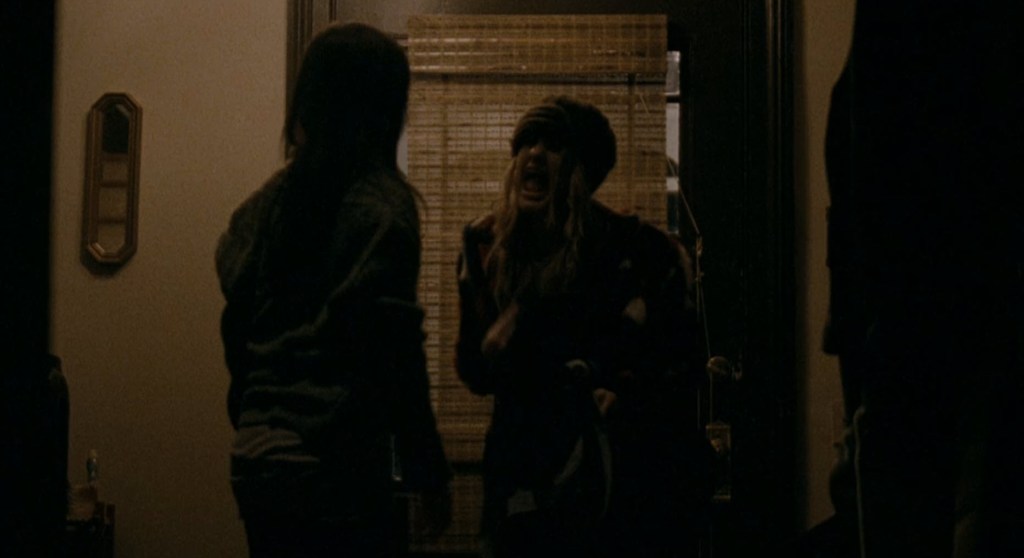
Laurie goes to her work friends’ place to crash with them. Laurie, having a major crashout, wants to go to the Halloween party they were originally planning to go to anyway. Because this party has drinking, drugs, drunk people, stoned people, nude chicks, and people having sex, oh, and because it’s Halloween, of course, Michael Myers is going to be attracted to this shindig. Michael kills Harley, one of Laurie’s work friends, and the boy she was shagging in the back of his “shaggin’ wagon.” Laurie, drunk to nearly the point of blacking out, has a vision of Deborah and young Michael.
Deborah tells her that it’s almost time for Angel to come home.
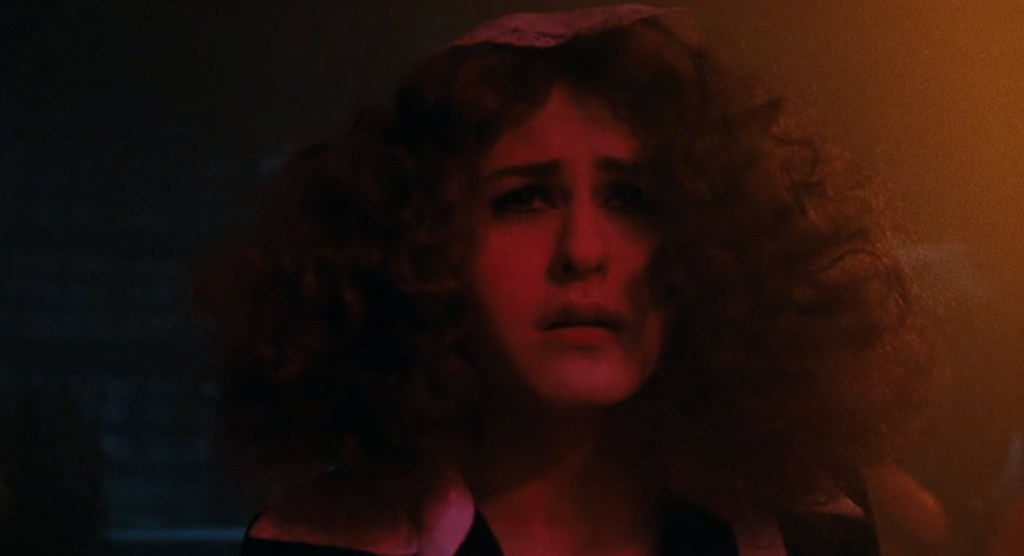
Laurie’s other friend, Mya, tells her that she’s taking Laurie home. Unfortunately, Michael has moved on to his next target… Annie. He ambushes and kills the deputy her dad sent to protect her. Then goes into the house to attack and kill the defenseless Annie while the ghostly visions of Deborah and young Michael watch.
Danielle Harris, who was unceremoniously bounced from the original series and would have been even more unceremoniously killed in that sixth installment if she had been in it anyway, actually gets two fantastic scenes in these Rob Zombie movies. The first scene is a terrifying scene in which she was attacked, dragged around the house, and left for dead. This second scene is horrifying in a more heartbreaking way. She’s slaughtered, and the way it was edited actually adds to the heartbreak as Laurie apologizes to her friend as we hear her heartbeat slowly stop. Meanwhile, Mya is attacked and killed by Michael as she calls 911 for help.
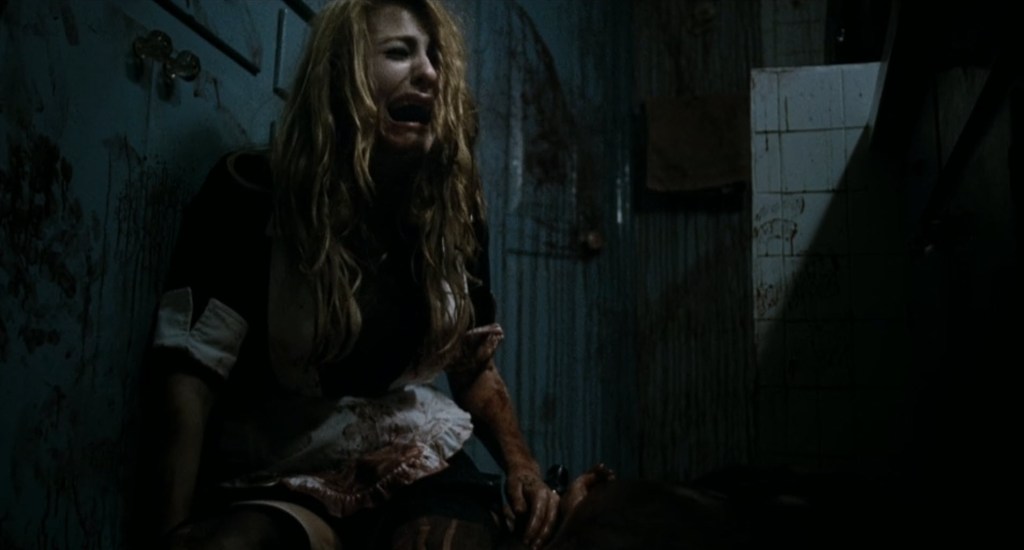
This is definitely something that Rob Zombie has improved in his films. Never once did Jamie Lee Curtis’s Laurie grieve for the friends that Michael killed in the original. She was only ever in a constant state of terror and fear. In the later films, after Curtis returned, she was 20 and 40 years removed from that night Michael attacked. She isn’t really in the grieving stage anymore. In this movie, you get the sense that Annie was most definitely Laurie’s best friend, and she got to grieve at least a little for Lynda and a lot for Annie. It is a character improvement.
Brackett grieved for Annie in the first Halloween II in 1981, and he gets to grieve even more in this version. That’s another upgrade because we have an Academy Award-nominated actor portraying the incredible grief of his daughter being slaughtered. So, improvement is there all around.
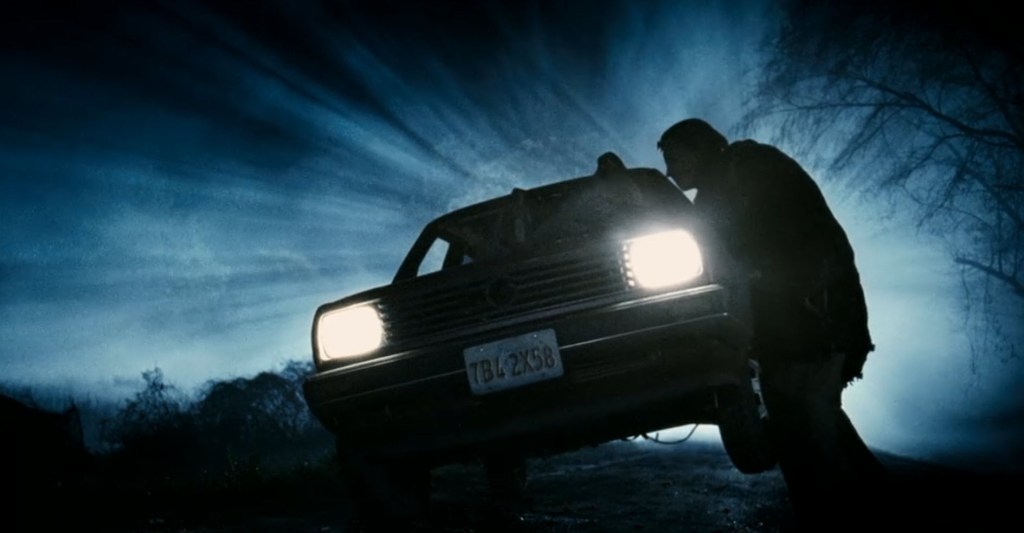
As Laurie escaped the Brackett house, she flagged down a car on the road. Michael kills the driver and flips the car over, knocking her out. Michael carries Laurie behind the vision of his younger self and their mother. Laurie is taken to a shack where Laurie and Michael are both able to see their mother. There was a witness who called in what she saw: a large man carrying a girl. The police believe Michael took Laurie to the shack near where the witness said she saw the figure.
Deborah makes Laurie say, “I love you, Mommy,” to her. The police arrive and surround the shack. Brackett has gunmen trying to get a clean shot at Michael. The news reports come in, and Loomis arrives on the scene, trying to redeem himself. Brackett wants Loomis to GTFO. He throws Loomis out, but Loomis decides to approach the shack to draw Michael out.
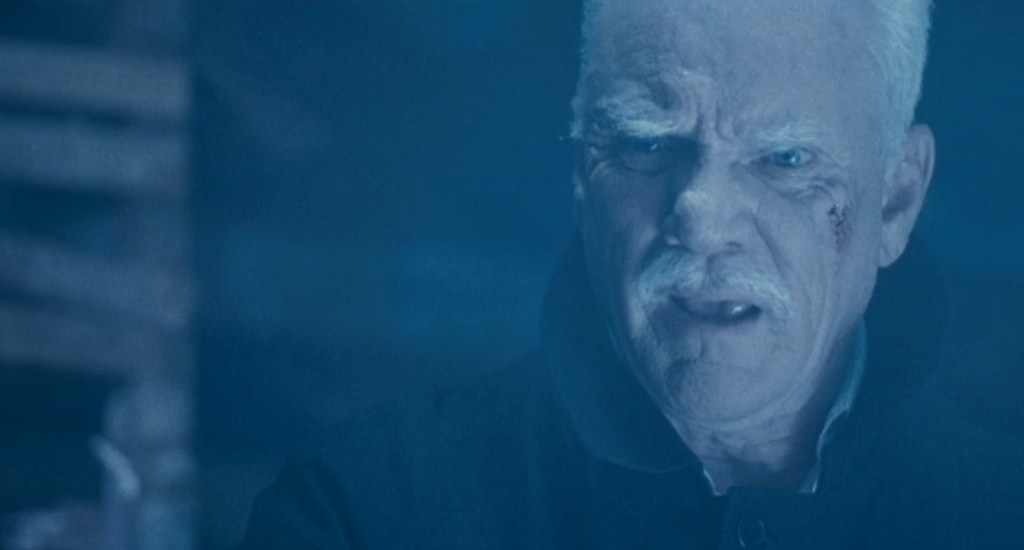
Laurie tells Loomis that the younger version of Michael is holding her down, but Loomis tries to tell her that it’s all in her mind. Deborah orders Michael to kill Loomis, and he does. Now, in the unrated, director’s cut, Michael yells “DIE!” to Loomis. In the theatrical version, Michael holds Loomis’s body up to admire his final murder, and is shot by Brackett. Michael falls onto a pile of metal bits that impale him. Laurie tells him she loves him and picks up his knife and stabs Michael, like a billion times.
Laurie comes out of the shack wearing Michael’s mask. In the director’s cut, Michael does not kill Loomis in the shack. He’s simply unconscious. When Laurie exits the shack, she approaches Loomis with Michael’s knife, and she’s shot by the police to stop her from killing him. In both versions, she’s later seen in Smith’s Grove sanitarium. She sees Deborah and the white horse approach her, and she gives a menacing grin, revealing that the Myers curse has passed to her.
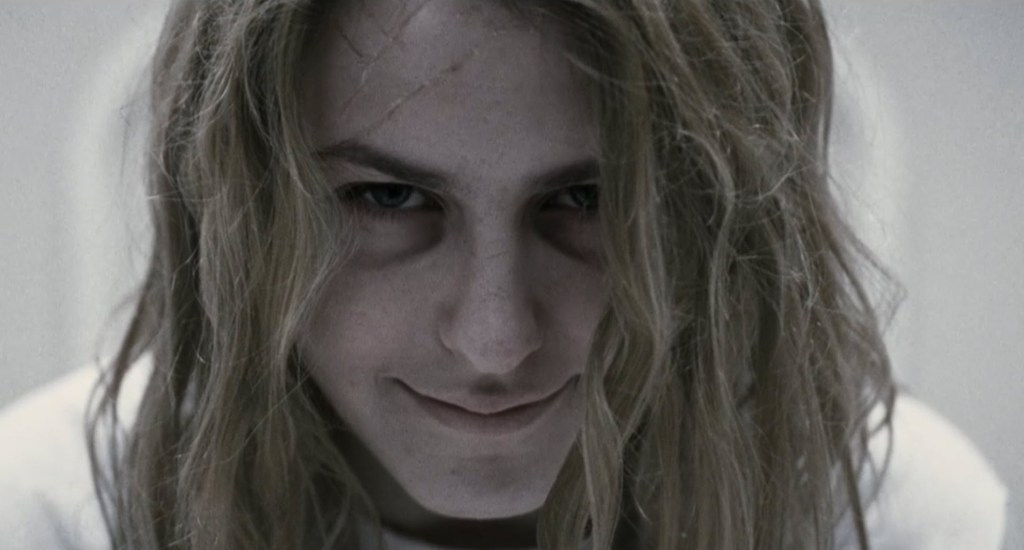
I think Halloween II is better than the first. However, that is not the popular opinion. First of all, if you already didn’t see or go along with what the first film was doing, you’re not going to like this one. I think this is the most straightforward and audience-friendly Rob Zombie film he’s made (at least up to this point). Detractors of the first will say this movie entirely assassinates Laurie and Loomis as characters. Laurie is no longer the good girl. She’s damaged. As I mentioned earlier, Loomis is no longer altruistic, but greedy and a bit of a turd with some serious sketchy ethics with cashing in on Michael’s murderous actions and psychosis.
I totally understand that, but as I mentioned in yesterday’s review of Halloween, the more you can separate yourself from the original films, the more you are able to understand that Zombie is making his own versions of these movies. Laurie is going to be damaged. She’s also going to find out so much more about who she is in a much more traumatic way than she did in the older films. If you tell this story in a more grounded, realistic way, you can open the door to Loomis trying to cash in on his work with Michael. It makes some sense to me, and I can look at these two films as separate concepts from Carpenter’s original works.
You almost HAVE to view them that way.
While yes, the metaphysical elements of the ghost of Deborah basically leading Michael to his revenge and reclamation of his baby sister are bizarre. You wouldn’t expect to have seen that in this trailer, but I think it helps push the psychological elements of this direction Zombie wanted to go. Again, if you already didn’t like the first film, you’re going to see this as an absolute trainwreck and make a billion zillion YouTube videos and posts on Letterboxd with all sorts of (what I am sure you think are) witty commentary and quips.
Personally? I liked Halloween, and I very much like Halloween II. They are both better than at least half of the mainline franchise sequels. Now, admittedly, there are things in both movies that I am not as big a fan of, but on balance, these are the best horror remakes of the 2000s. I’m kind of surprised myself a bit saying this, but here we are. I’m glad these versions exist. They are actually kind of artistic in a way that Rob Zombie can make violence artistic. The casting is good. I think the movies are a fair representation of how Michael Myers would be seen in a modern, 2000s lens. I think these movies (mostly) work. (Mostly) Very well.
I will admit, I watched these films on Amazon Prime, so I didn’t watch the unrated/director’s cuts. I watched the theatrical versions. I understand that for Halloween II in particular, the Uncut/Unrated/Director’s Cut definitely adds elements, especially with Laurie’s attitudinal change, desire to medicate her problems away, and arguments with Annie, which can rub people the wrong way. I don’t know if that would have done that to me. I’ve seen some of those scenes and, out of context, I see how it can grate on people. Maybe I would like those versions less than the theatrical cuts.
But, I have to admit… I built this whole Rob Zombie Spookshow around covering these two Halloween films on Halloween Eve and Halloween. I thought that was a perfect time to cover these notorious and infamous movies. I chose the other movies based on what I thought would be good to cover on the site, and I gotta say… Outside a little disappointment with The Haunted World of El Superbeasto, I think this was a triumphantly great time watching movies. I knew The Devil’s Rejects was going to remain the best of the best, but I was surprised by how much I really liked Halloween II. Plus, I got to appreciate The Munsters and Halloween even more than the first times I watched those movies. As for 31, I loved Richard Brake’s terrifying performance in that.
I dunno about you, Enemaniacs, but I think this was a banger of a month on balance.
But now, let’s put away our costumes and finally rest to enjoy our Halloween candy and our tricks and treats and our scary movies for the weekend. Next Friday, we return to our regular schedule with a proper eulogy for Cannon Films’ greatest action star, Chuck Norris. Earlier this year, I reviewed Missing in Action, which turned out to be a hit for Cannon. Next time, I’m going to look at the prequel, appropriately titled Missing in Action II: The Beginning.
So, until then, Happy fuckin’ Halloween and we all deserve one good scare and was that the boogeyman, I do believe it was!

