
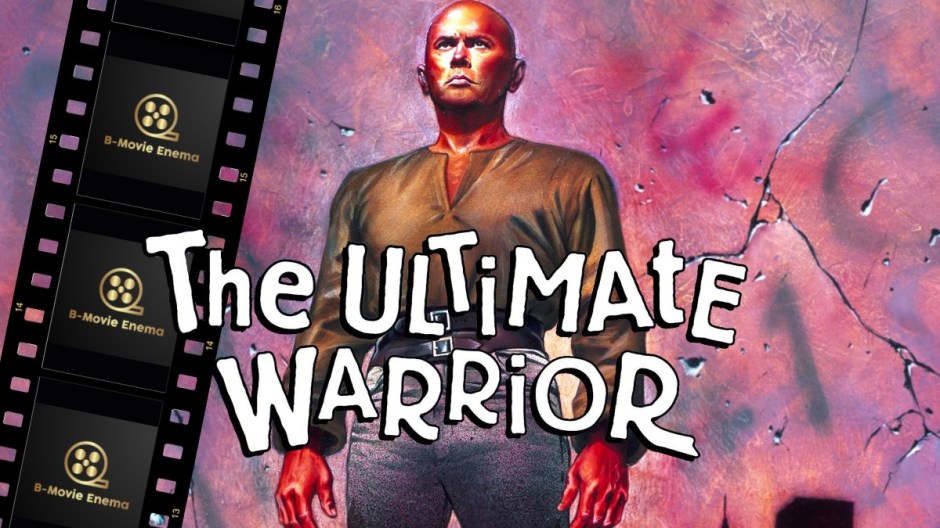
Welcome to the future… and a new review here at B-Movie Enema!
Prior to the release of Stanley Kubrick’s 2001: A Space Odyssey in 1968, science fiction was not taken particularly seriously. Star Trek was popular, but on television. Lost in Space was light entertainment for the family. Most science fiction was not highly regarded as an adult genre. In the 50s and 60s, sci-fi flicks were often low-budget, monster-filled movies for kids to appear on drive-in screens for teenagers to make out to. Sure, there were the occasional thinkers like The Day the Earth Stood Still and Invasion of the Body Snatchers, or the spectacles like The War of the Worlds. But beyond that, there were the Godzilla films and the Roger Corman cheap and fast flicks. It would be decades before those would be looked at more seriously.
However, after 2001, studios became more interested in trying bigger ideas in the New Hollywood Era of the 70s. Silent Running would become influential. Logan’s Run was lavish and a fair adaptation of a dystopian future depicted in a novel. The Andromeda Strain put Michael Crichton on the map. The Omega Man and Soylent Green established Charlton Heston as the genre’s biggest star after 1968’s Planet of the Apes.
There happened to be another leading man of some repute who starred in a fairly well-reputed sci-fi thriller, Yul Brynner. That film was Westworld. Brynner would follow that up with this week’s film, The Ultimate Warrior.
Brynner was born in Vladivostok in what is known as the Far Eastern Federal District of Russia. Basically, it’s the part of Russia that borders the Pacific Ocean, the Sea of Japan, China, and Mongolia. It’s the VERY Asian part of Russia. It is also home to at least half of Siberia. He was born after the Russian Revolution, which captured and killed Czar Nicholas II and his family. At a young age, he would travel to China with his mother. When he was about 10, he got a guitar for his birthday and began taking music lessons. This basically started him on the path of the arts. He’d end up in Europe with his mother and siblings when there was a growing fear of a war between Japan and China. There, he’d meet French writer Jean Cocteau, and he’d end up getting to meet all sorts of artists and performers like Picasso, Dali, and Josephine Baker. He arrived in the United States in 1940 and became an actor on Broadway.
There, he got the role he’d forever be connected to – the King Mongkut in The King and I, a role he’d play 4,625 times on stage (literally). He starred in the big screen 1956 adaptation and won the Academy Award for Best Actor. That led to Cecil B. de Mille casting him as Ramesses II in one of the biggest spectacle films ever made, The Ten Commandments. He was second billing only to Charlton Heston. In the 60s, he’d star in The Magnificent Seven; the look of his cowboy character would end up being used for his villainous robot character in Westworld. While The Magnificent Seven was a bit of a disappointment in the States, it was big in Europe, and especially in the Soviet Union. Brynner’s final few years in film were his science fiction films, Westworld and its sequel, Futureworld, and The Ultimate Warrior. He’d appear in a few Italian films as well, but he retired from film in 1976. He’d later die of lung cancer in 1985 at the age of 65. Before dying, he’d create a public service announcement in association with the American Cancer Society to warn against smoking, as he was already diagnosed with cancer and expected to die soon.
The Ultimate Warrior is also the return of Robert Clouse as director. This was the follow-up to the last time we talked about Clouse, 1974’s Golden Needles starring Joe Don Baker! Clouse actually wrote this himself. You’d think a 70s sci-fi film about a pandemic creating a dystopian future would have been based on a short story or book, possibly from a Richard Matheson or something. Be it martial arts flicks starring Bruce Lee or Joe Don Baker sexing up a lady or a team of superhero karate fighters or Gymkata or pandemic dystopias, Clouse turns out to be a jack of all trades, right?
Right out of the gate, we know what Robert Clouse is not…
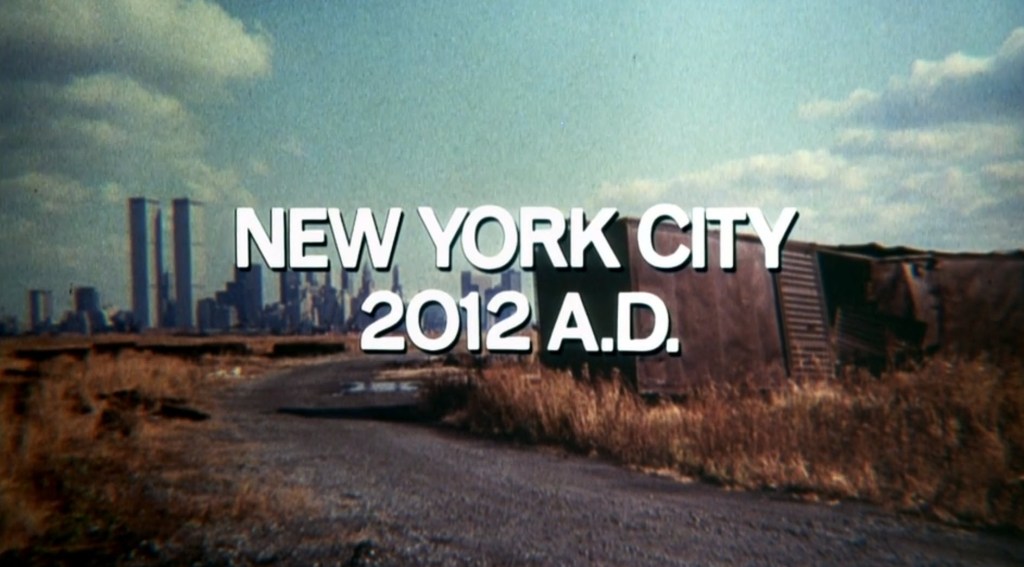
He’s not an actual, for-real time traveler from the future. I’ll… I’ll wait for a moment for you to pick out why I say that.
I actually do very much like these credits that are playing over shots of “New York City” in the year 2012. No music is playing, just the sound of the wind. There are no people or animals until the camera focuses on some pigeons that people are grabbing and stuffing into bags. This looks bleak in that “this is where we’re headed” sort of way. Science fiction isn’t all Star Treks and utopias. This era, before Star Wars hit the screen, often depicted the future in pretty scary terms. The future was bleak or worrisome because we were living in bleak and worrisome times. An unpopular war, energy concerns, general unease about where we’re headed as a species… That’s what 70s science fiction was selling folks.
Naturally, Star Wars would not just bring back hope to the genre, but it would change science fiction for years to come. A lot of this era, sci-fi was attempting to be a little more cerebral. Star Wars would make it snappy and exciting with a lot of the flavor of old Flash Gordon serials. But I digress…
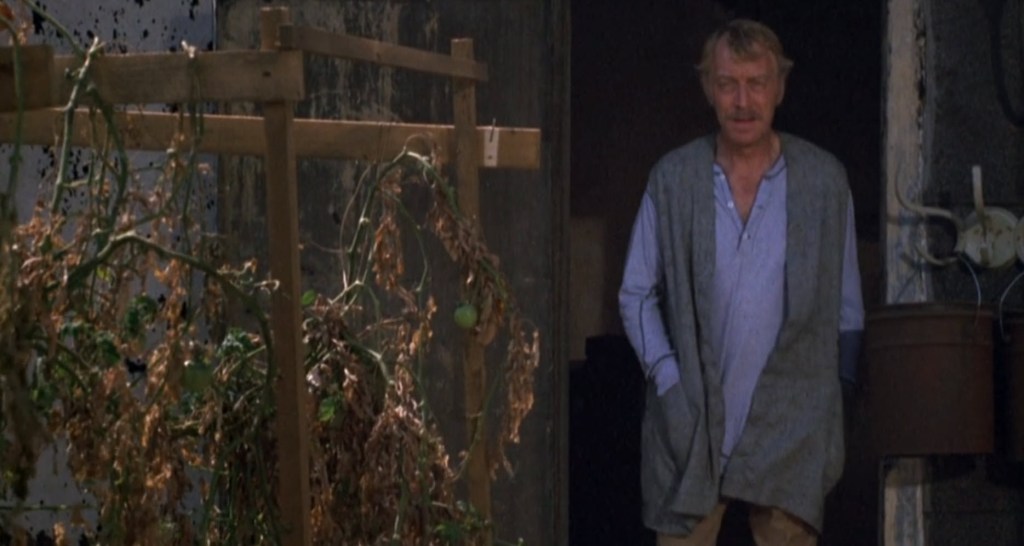
Right away, this movie establishes a few things. First, New York is, effectively, barren. The hustle and bustle of the city is all but a distant memory now. People do scramble in abandoned buildings for food, like pigeons, because a terrible pandemic and blight have killed off plants and livestock for people to feed on. Some, like William Smith’s “Carrot,” raid and pillage. Others, like Max Von Sydow’s Baron and Richard Kelton’s Cal, are scientists who try ot figure out a way to survive using science. Baron and Cal live in a fortified building in New York City. Cal has figured out a way to create plague-resistant seeds to grow things like tomatoes.
Baron leads a tribe of survivors. This tribe is peaceful. They scavenge, but don’t raid. However, that puts them in constant danger of the marauding gang that Carrot leads. Baron knows they need some beefed-up security. So, he plans to hire a beefed-up man, the titular “ultimate warrior” named Carson (Yul Brynner). When we first meet Carson, he’s standing on top of an overturned car. He’s just not standing there… He’s been practically frozen like a statue on top of the car for two days.
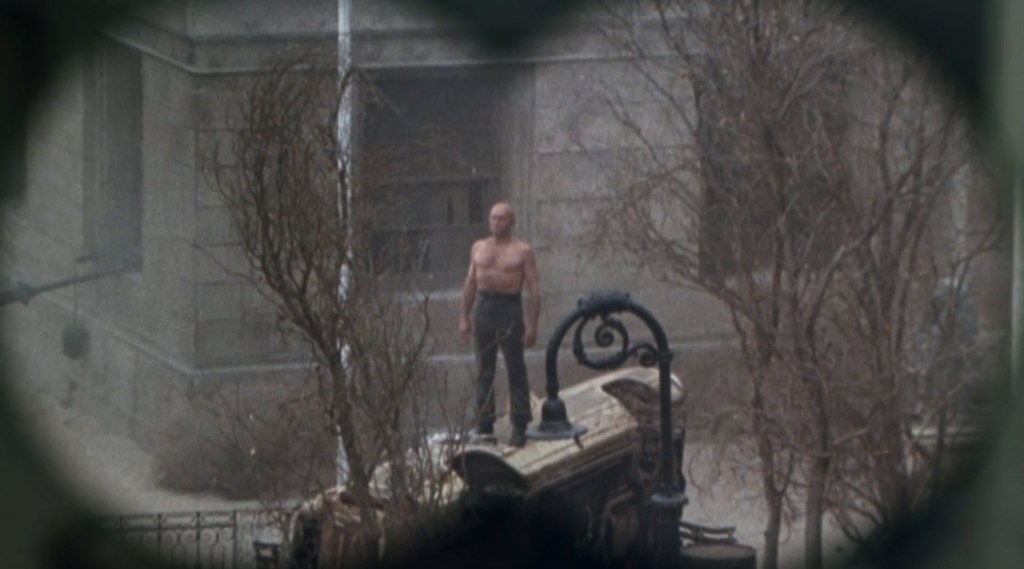
Baron says he NEEDS this man’s services. Carson has put his services as a skilled fighter out to all the tribes. Some have approached him to talk. Baron cannot afford to miss out on this badass. Much to the surprise of one of his advisors, Baron wants to travel to the library where Carson is perched atop the car. He and a few men go outside their compound, something Baron VERY rarely does because of Carrot’s men. But they are in such dire need of this man’s skills, he has no choice.
Just as a quick aside, I’m pretty sure the streets of the city Max Von Sydow and his other tribesmen walk through are the city street backlot that many, many, many movies and TV shows have used. I’m pretty sure it’s the same backlot as I’ve seen in Hollywood Boulevard, at least two or three episodes of Star Trek, and even Happy Days. Obviously, it’s been used more than just those instances, but that’s what immediately came to mind when I saw them walking down the streets. I could be wrong, but I dunno. I don’t think I am.
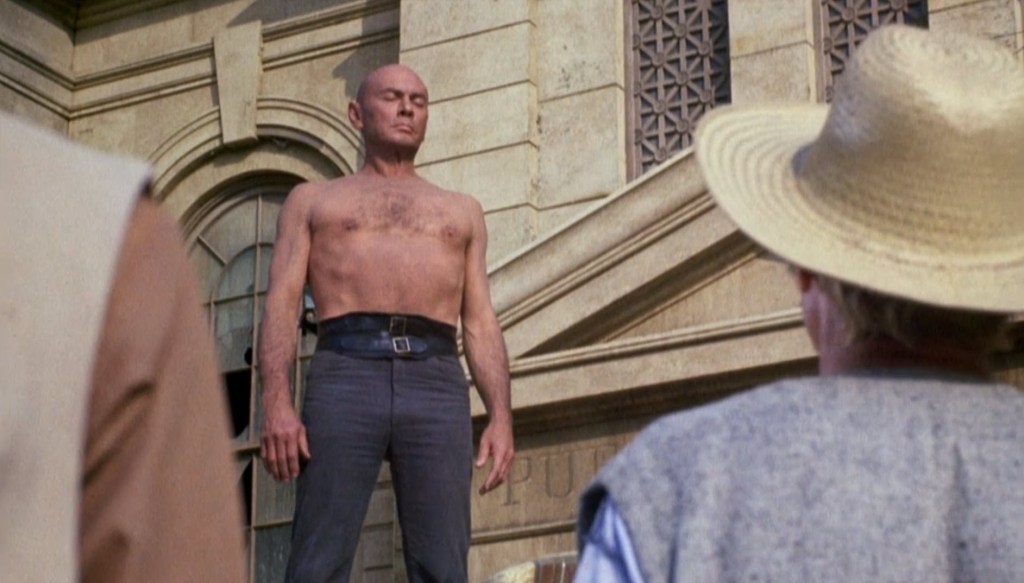
When Baron and his crew approach Carson, he stands still, with his eyes closed as if he’s simply meditating. He does not speak to Baron. He does not show any indication that he hears or even considers the offer Baron extended. What did Baron offer him? Three square meals, no desire to raid or steal from others, a rat-free, dry room, cigars if he likes to smoke, and sex if he is interested in some of the compound’s women. Carson doesn’t open his eyes until the party steps away.
As they walk back to the compound, the party is attacked by a gang of people who live in the brownstones. One of them is killed brutally by a giant rock to the head. The party is saved by Carson, who decimates the attacking gang. Baron realizes his offer was accepted and leads Carson back to the compound.
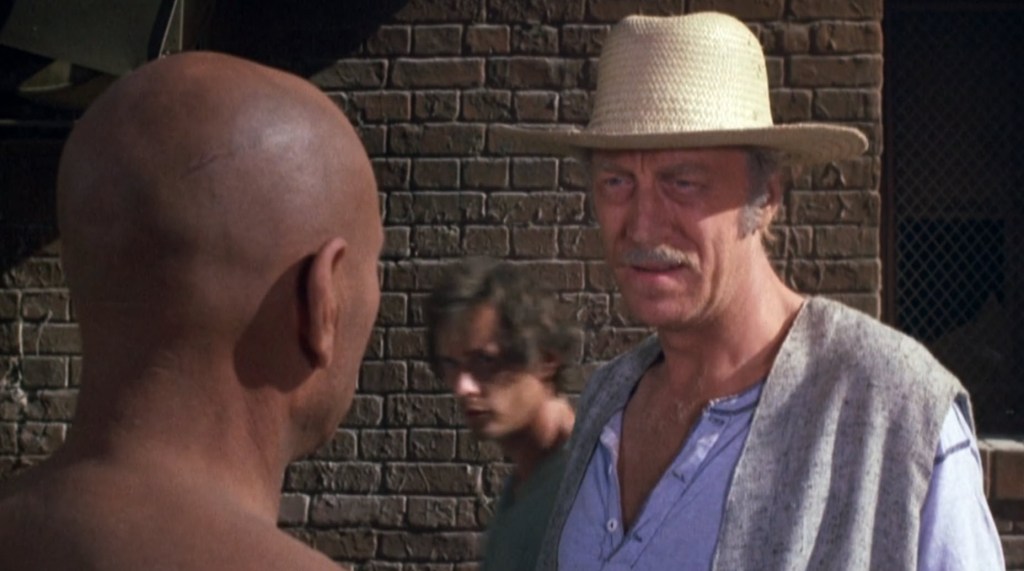
Meanwhile, Carrot and his rowdy crew live in a jail. When Carrot finds out that Baron recruited Carson, he’s curious why. After all, Baron has all the men he could possibly need and maybe not enough food for all of them. Besides, why does Baron need a warrior?
After Carson settles in, he goes to meet with Baron. Baron is curious what it was in his offer that attracted Carson. Was it the extra portion of food or the noble pursuits that don’t include stealing and killing? No, nothing like that. Carson was impressed that Baron had a stash of cigars. Baron is also impressed that there is a bit of refinement to Carson. He sits politely in a chair. He doesn’t plop down into a seat.
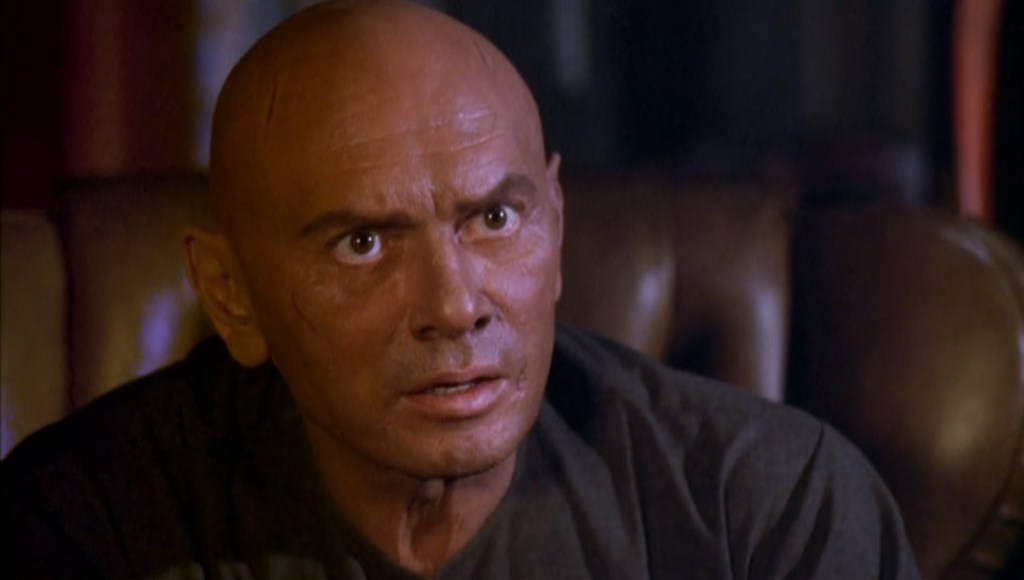
There is a little exchange of personal information between Carson and Baron. Baron reminisces about his father’s 1981 Cadillac and how he had to watch his parents see their world taken away from them as society crumbled. They died early in the pandemic, and he was able to carry on, growing up in what the world had become. This made him more capable of surviving than they were. Carson says he’s from Detroit. The situation there is not much different than New York City. There are a few groups, but it’s largely an empty city. He tells Baron that he may not be able to hold up his end of their agreement for very long. He’s passing through New York to head to a family home on an island off the coast of North Carolina. It’s a place he hopes to find some sort of peaceful life.
Because, after all, both Carson and Baron are now hearing about how survivors are turning to cannibalism, and it scares them.
Not everything is as hunky dory in Baron’s encampment as it may seem. Sure, they have some safety. Sure, they have some fresh vegetables. However, concerns are growing about supplies of basics. One of the younger women, Barrie, has a baby. She accuses Melinda (Joanna Miles) of lying about giving another woman in the community powdered milk. When Robert believes Melinda about giving that other woman beans and not powdered milk, Barrie thinks Robert is allowing their baby to die. She then calls him a coward for not wanting to take a chance of exploring an abandoned bakery for the milk.
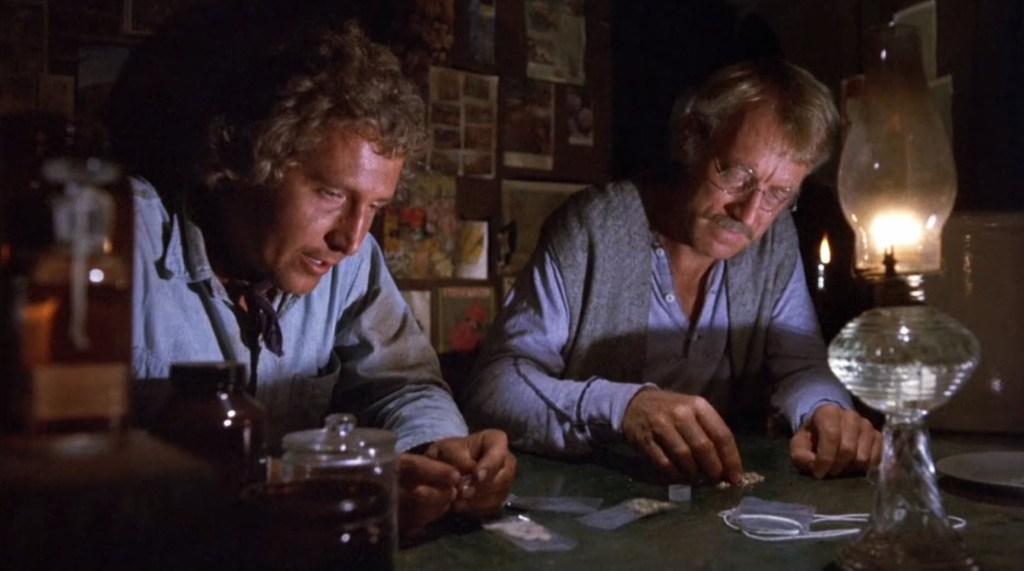
Let’s backtrack to that conversation between Carson and Baron for a moment, because that ended with a pregnant pause from Max Von Sydow. Another issue that is much more major than the individual supplies for individual people is that Cal says they are running out of seeds. They could get more seeds if they had a safe place to spread out. That way, the seeds would grow and multiply more naturally. Baron asked Carson if there was a good water source, to which Carson said there was “enough.” Baron asks Cal if he could find a place to spread out, would he leave his garden? Cal agrees, but it would be hard.
Carson speaks to Baron about what he’s observed over the last few days. One, he “met” Carrot by way of binoculars and a nice “fuck you” gesture from Carrot. Two, he senses that what people are left in Baron’s compound don’t feel like they will survive much longer. Baron says he identified that fatalism in his people. It’s easy to, right? The world is a rough place in this timeline. Supplies are running out, and there’s only so much Cal can do to science up a solution to feed them all. When those supplies run out, and famine starts to set in, Baron will only be able to do so much to inspire and lead the survivors. Carson met Melinda earlier in the day. Melinda’s pregnant. She’s also Baron’s daughter. He needs to find a new home for his people, his daughter, and his grandchild. Baron asks Carson to lead his people to the island in North Carolina. There, Baron can effectively retire, Cal can spread the seeds to multiply and replenish their supply, increase the chances of sustained survival, and maybe Carson would take over as their leader. He has the fortitude and skill that others can look up to. I mean… He’s Yul fuckin’ Brynner and all.
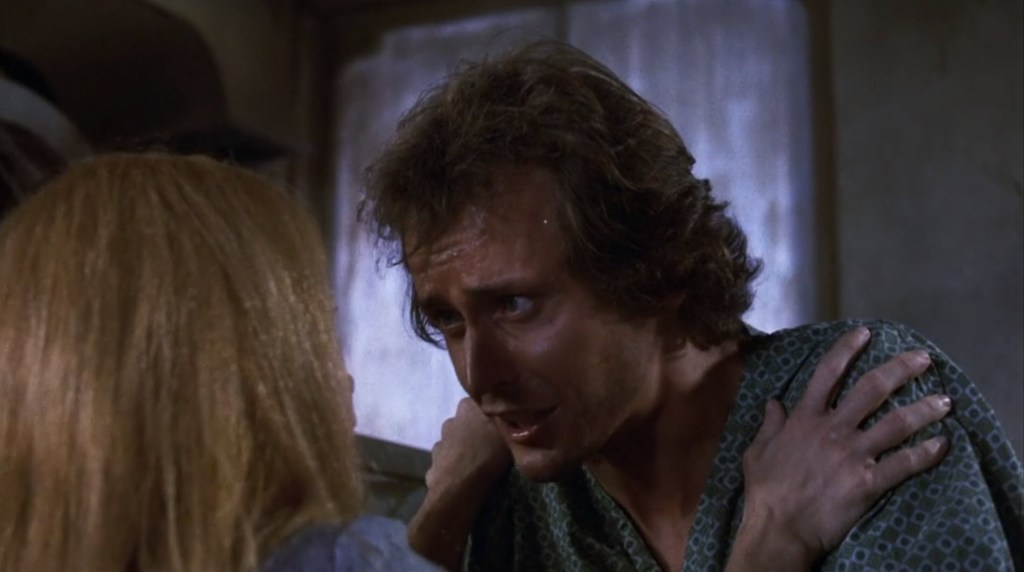
Robert discovers that Barrie left the compound with their baby. Now, look… I’m not a father. I’m certainly not a mother. I can safely say that I have a wholly different perspective about instincts and survival desires than a woman who has a baby that she’s afraid is starving. I get it. But… Sigh… Barrie is, at best, a moron. At worst, she’s a fucking liability. She was enraged about not having powdered milk, a resource she thinks was given to someone else who does not have a baby. Oh shit… What if that other woman had a baby too? Is there some sort of competition between Barrie and the other woman over whose child will survive the holocaust? Yikes.
Anyway, while Robert was working, Barrie LEFT THE COMPOUND WITH THEIR BABY to find the powdered milk at the bakery down the street. One, that is incredibly dangerous. Two, that is really fucking incredibly dangerous! There’s a roving William Smith out there who I don’t think is above raping this woman and eating her baby in front of her. I understand the desire to care for your baby. I understand that baby’s her number one motivation in life to protect and feed. But goddammit, woman… You’re gonna get people killed here. There’s always one of these people in these apocalyptic situations, isn’t there? Always out for themselves and unable to see the community’s needs and consider that there needs to be some sort of equal sharing among all. Call me Comrade Geoff, because in my post-apocalyptic communist compound, people like Barrie would be GTFO’d pretty quick if she isn’t considering others in the community.
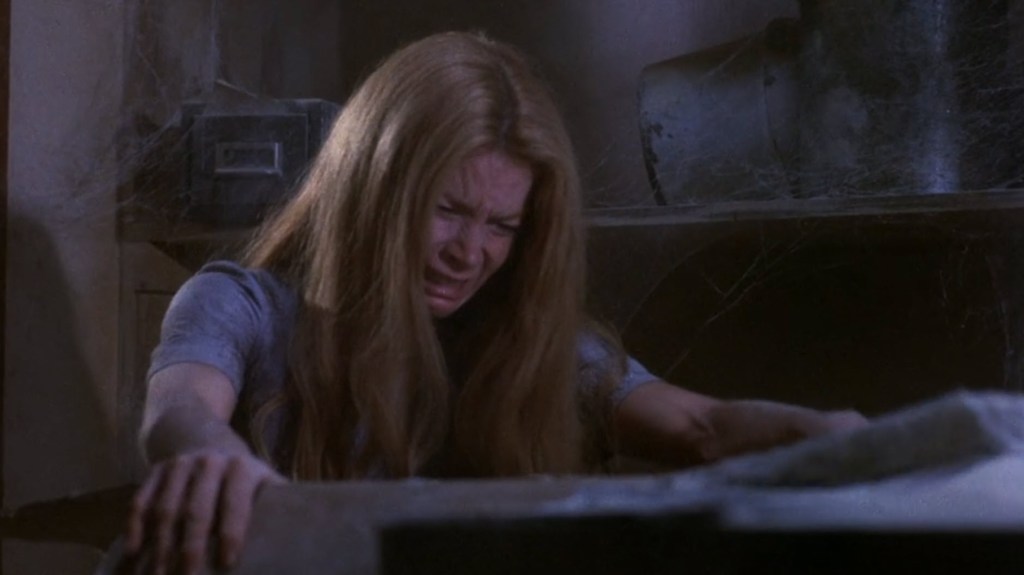
She turned out to be pretty fuckin’ dead wrong about the powdered milk in the bakery. The box she assumed was full of the stuff was just business papers and receipts. Carrot’s goons come in and beat the shit out of Robert and… you guessed it, kill them and take the baby.
This creates a conundrum for Baron. He has to assume that Barrie and Robert are dead, and probably the baby as well. However, these are members of a community, no matter how much Barrie thought she was above them and wanted their portion of the milk. The other people in the community expect that the badass Carson will go out and recover the family. The problem is, Carson says he’s been paid with extra food by Baron to do these sorts of things. They EXPECT him to now perform, but Baron has ulterior motives for bringing Carson in. As stated earlier, he wanted Carson to lead his daughter and her unborn baby to safety. Carson correctly points out this conflict of interest because Baron is afraid his daughter’s savior would be sent to his death if he goes to retrieve Robert, Barrie, and their baby.
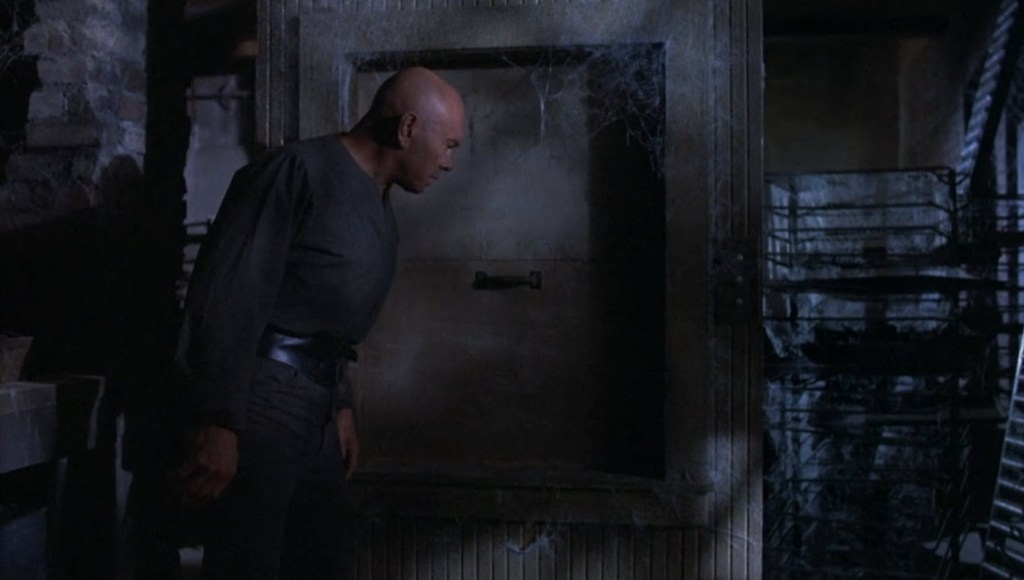
Carson decides to perform his duties. He actually goes out into the streets at night. He goes to the bakery, where he hears the baby crying and finds the bodies of Robert and Barrie. He thinks he’s found their baby, but it’s just a woman holding it. She says, “It’s dead,” to a horrified Carson. He’s then attacked by Carrot’s goons. Carson manages to escape by killing some of the goons, jumping across buildings, and carefully working his way back to the ground and back to the compound. He successfully gets back because Carrot doesn’t allow his men to get too close to Baron’s compound.
A defeated Carson returns to tell the community that the family was found, all dead.
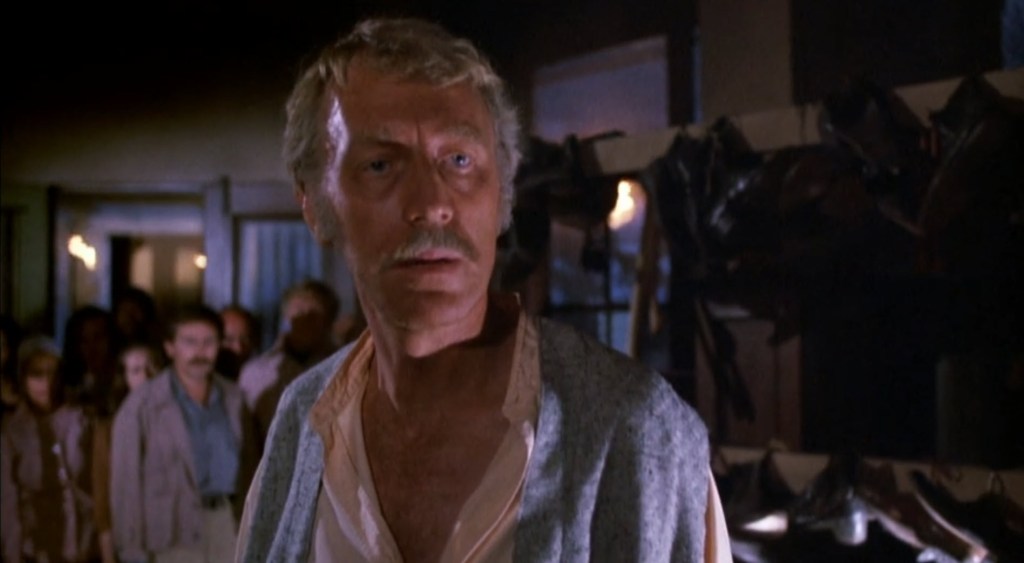
This movie makes good use of a classic trope in these types of movies. A man named Silas has been stealing ripe tomatoes from Cal’s garden. During a scene in which unrest starts to overflow, and people start raiding the supply storage. Silas is accused by others, and he even confronts Baron about how he’s been concerned about rations. Silas felt that Baron was too busy with his daughter’s safety and Carson to hear from the little people. Also, Baron hasn’t been seen losing as much weight as everyone else.
Baron promises an investigation into this stolen food stuff, but Silas manages to plant (no pun intended) a tomato in another guy’s room. He’s put on trial, and no one stands up for his character. He’s sentenced to death by expulsion from the community. That trope I mentioned is this exact thing. Inner turmoil is always greater than the outside threat. In a zombie apocalypse, the zombies may be the monsters at the gates, but interpersonal issues between survivors or our protagonists create a larger issue to deal with because these are the monsters INSIDE the gates. Here, as resources start to run thin and people are already in a heightened sense of terror and mourning over the loss of a family that contributed to the community, we see this exact same thing play out. People are stealing from others, letting others die over the accusations, and something similar to mob justice, forcing people who should be working toward the whole community to think of themselves first. It never really fails to create something of a compelling element to these types of movies.
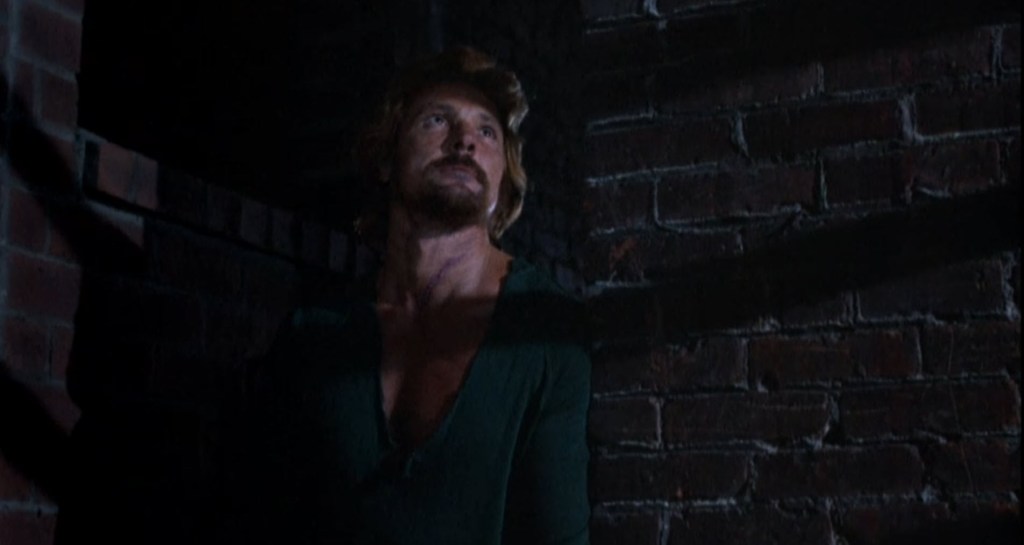
While the danger inside the gates is always a problem, there is still a guy named Carrot and his band of goons outside the gates, ready to cause problems. He orders his people to build a way to climb up to Cal’s rooftop garden quietly and avoid notice. Cal hears them stealing from the garden, and he confronts these guys. However, there are too many of them, and he’s killed by being thrown off the roof. Unfortunately for the goons, they destroyed the contraption that allowed them to get up there, and there’s a badass Yul Brynner coming their way. He kills a few goons, and other members of the community toss another off the roof.
Just before this scene, it was pretty much inferred that Cal was the father of Melinda’s baby, and her reaction to getting the news about his death from Carson is to slap him.
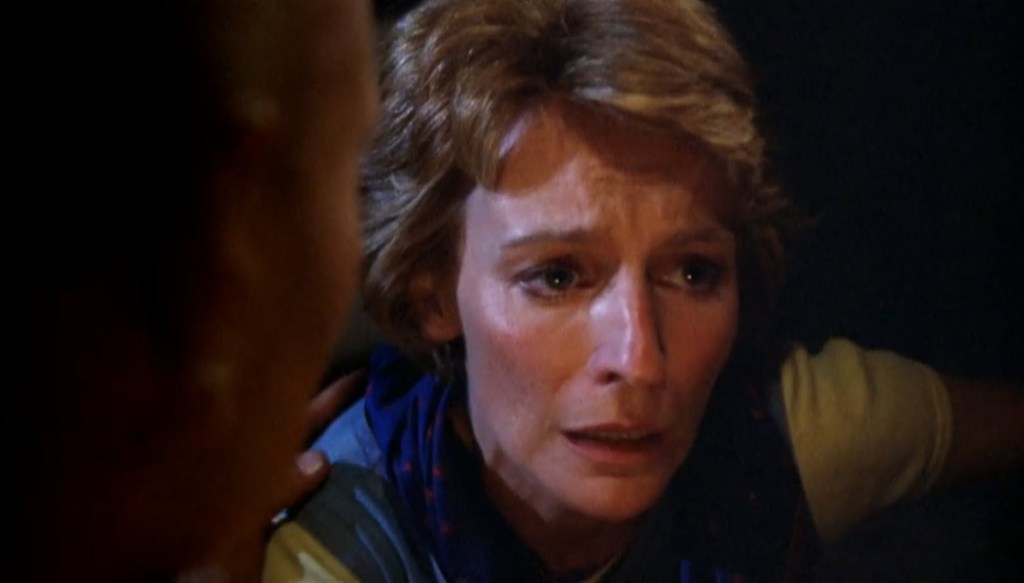
Baron now realizes there really is no saving this place. He wants Melinda to leave the city with Carson. Baron knows that Carrot is onto something wrong happening in this settlement. One, there is some sort of weakness he can exploit. Two, Cal found a way to grow actual fresh tomatoes.
Baron drugged Melinda while he went to tell Carson that today’s the day they need to leave. There’s an underground trap door that Carson and Melinda will use to get out of the city. Baron tells Carson that, of course, he will need to deliver the baby somewhere along the way to North Carolina. I actually got a pretty loud chuckle when Yul Brynner responds, “Yeah, I was wondering when you would get around to that.”
Some of the folks in the settlement witness Baron sending Carson and Melinda into the trap door. At least one of them also overhears Baron tell him that if it comes down to saving either the seeds or Melinda, Carson has to save the seeds. That’s an interesting moment in the movie. The whole reason for bringing Carson in was to seemingly save his daughter and grandchild. Yet, without being able to lead everyone away, along with Cal, who would continue to help reproduce seeds now dead, Baron sees this more as a humanity-saving situation than just his own daughter. It kind of misdirects the “good of the many” concept that we all know well from Star Trek II: The Wrath of Khan. Baron hopes Carson will save his daughter, along with providing a place for humanity to thrive again, but he also accepts that saving humanity may also mean sacrificing his daughter. Kind of a compelling moment in this movie.
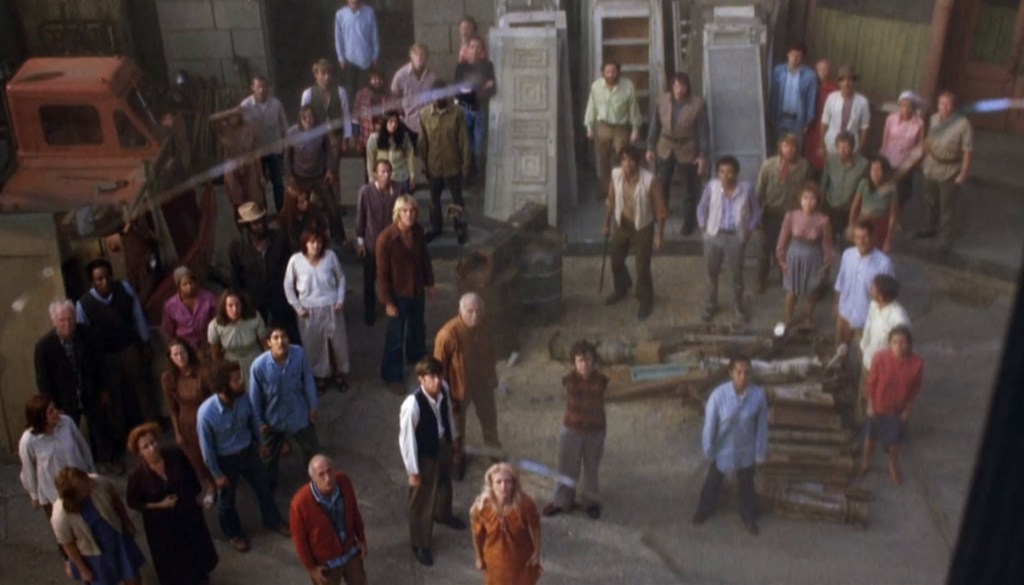
It should be no surprise that word spreads fast in this community. They are pretty pissed. The community asks Baron how much food was sent with the two of them. He tries telling them that they only went with exactly what they needed, and that he’ll help rebuild the garden, starting first thing in the morning. The community also doesn’t like that their ultimate warrior was sent away with his daughter.
After being unsatisfied with his answers and how little food or protection they now have, a mob forms and they storm into Baron’s office and beat him to death.
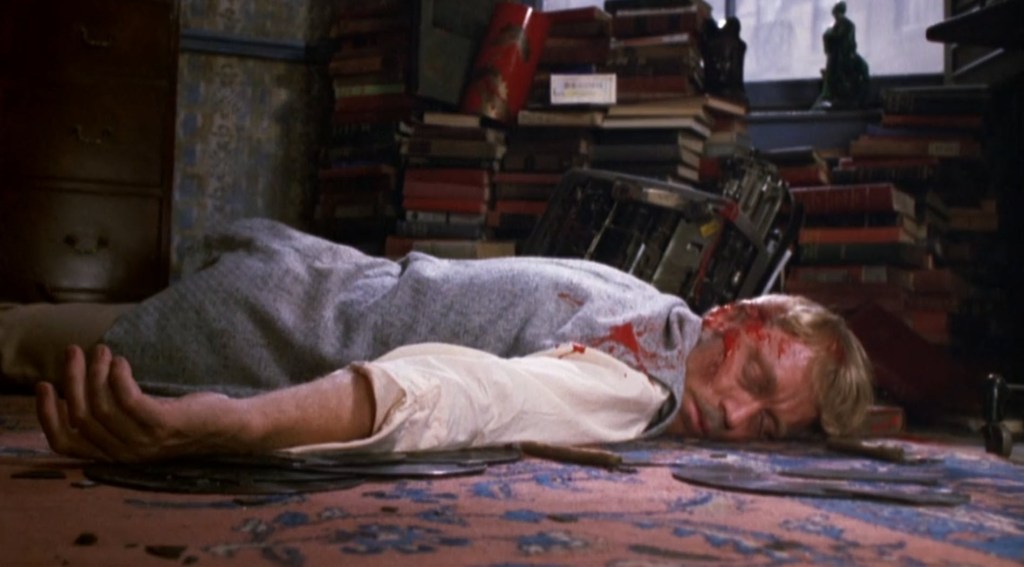
Silas then goes to Carrot to say he wants to join them. He also reveals that Carson and Melinda went underground. He tells Carrot that Carson has the seeds.
Knowing where Carson, Melinda, and the all-important seeds are, Carrot sends the Harkness brothers, his very best trackers, hunters, and killers, into the underground to find and kill them. Oh, and yeah, get those seeds. Soon, most of Carrot’s gang goes underground to chase after the seeds. Unsurprisingly, this gives Carson a chance to kill a LOT of guys.
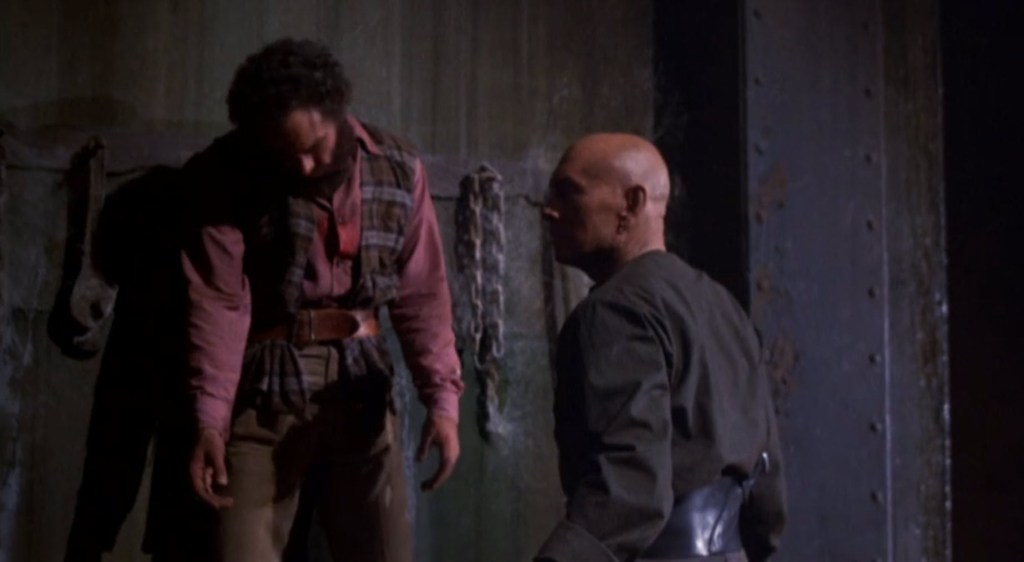
The chase through the subway tunnels eventually leads to Carrot and his gang facing off directly with Carson. Carson manages to kill pretty much all Carrot’s men and followers as he and Melinda are slowed by her nearly full-term pregnancy. She actually ultimately gives birth before they can exit the city. She manages to push the baby out without making much noise, but when the baby cries, it gives away their location.
This is when Carson manages to massacre Carrot’s men, one by one. Those he does not kill, sees what Carson’s capable of, and, smartly, runs away. Carrot and Carson finally battle face-to-face. Using a heavy ball at the end of a sharp cable, Carrot can do some damage. However, with the cable around Carson’s hand, Carrot falls into a pit in the subway that opened up when one of his men fell through rotten wood. Carson attempts to use an axe to either force Carrot to let go of the cable or cut through it. When Carrot tells Carson that they will fall together, Carson decides to chop off his own hand, saving himself and sending Carrot to the bottom of the pit to his doom.
Carson coterizes the hand, and he leads Melinda and her baby out of the city, and, presumably, to that island off the coast of North Carolina, where they find it completely overrun by the living dead.
Nah, I’m fuckin’ with ya.
I actually quite liked this movie. I was initially worried this would end up being one of those more boring and lower-end sci-fi apocalypses like that Richard Harris movie I watched a couple of years back, Ravagers. That was a movie with ideas, but it never really achieved all it could. This movie is a little smaller scale, but leans heavily on specific ideas of survival and providing the literal seeds to, hopefully, the return of civilization. Yul Brynner is always great. Max Von Sydow is always great. You gotta love a crazed, killer William Smith. This movie has quite a bit going for it. I think it uses its tropes well too.
I think where you will see people maybe underrating this on sites like Letterboxd is due to the struggle people have with the 1970s era sci-fi (pre-Star Wars, that is). It’s not lasers and spaceships. It’s humanity on the brink of absolute collapse and extinction, finding a way to survive. It takes itself seriously, while better sci-fi films like Logan’s Run kind of camps it up a little bit by showing a society blissfully stupid to the horrors of what their society actually is.
I’d gladly watch this movie again just for Yul Brynner. He’s not exactly someone who is as well remembered today as he once was when I was younger. He just looks like a guy who can simultaneously be refined and classy as well as a guy who will literally kick your ass through your teeth. I’m not even sure how that would work, but he cuts such a mean shape and stature that I’m not going to test my luck to get my chompers knocked out by my buns.
Yeah, I recommend The Ultimate Warrior. Why not? As seen above, I found a lot to think about. The characters and situations were compelling enough to make me think about how things could potentially play out. It’s not perfect, but it’s a perfectly serviceable and watchable flick.
But compared to next week? I dunno. Next time we have a movie that started out as being pretty poorly received and reviewed, but grew a fandom. Not only that, but the younger film scholars found a lot to explore with this movie, which is as scary as it is campy and funny. Join me in seven short days for 1980’s Motel Hell!

